


The Japanese construction industry experienced its first major boom over 50 years ago with the Tokyo Olympics, and that momentum has continued until now. However, it is expected to plateau by 2040 due to the demographic crisis. How would you assess the current state of the construction industry in Japan?
The Japanese construction industry is at a crossroads right now. As you mentioned, the scrap-and-build system has largely driven the industry to this point, and it still accounts for most construction activity today. But if we look back historically, Japanese houses and shrines were traditionally built with wood. For example, the Ise Shrine is rebuilt periodically, and one of the reasons for this is to pass down traditional building skills to the next generation.
Another reason the scrap-and-build approach became common is that Japan is prone to earthquakes. After each major earthquake, building regulations become stricter to ensure greater safety, which has fueled the cycle of demolition and reconstruction.
At present, we are still seeing more scrap-and-build projects than renovations or conversions. However, construction costs are rising faster than I’ve ever seen before. The pace and scale of these increases are outpacing general economic inflation, which is driving down the return on investment across the industry. As a result, more customers are now turning to renovation and conversion projects as a more cost-effective alternative.
Given the rising costs in the construction sector, companies increasingly need strong partners to help navigate these challenges and optimize efficiency. As a provider of facility strategy and solutions, how do you position yourself as a valuable partner for these companies?
First, we need to understand why costs are rising so quickly. The biggest factor is the shortage of workers. This applies not only to on-site construction workers but also to engineers, managers, and other essential staff. Construction demand itself has remained steady, so the issue is not a decline in demand but a lack of people to support it. This has resulted in long waiting lists across the industry.
One way we support our clients is by helping them identify the right timing for their investments. We carefully analyze the market, including the area, project scale, and asset type. Based on that, we provide advice on when a design firm will be available and when the construction process can realistically begin. This aspect of our service is essential, as it helps clients limit cost increases through better timing and planning.
Another important point is that we cannot control overall market prices. Instead, we shift the focus to how clients can increase their income. This could involve improving operational efficiency or making smarter real estate investments. Our role is to develop better plans that help clients grow their revenue. Rather than focusing solely on reducing costs, we also help them enhance income, which is just as critical in today’s environment.
Japan’s aging population is leading to greater concentration in urban areas. What trends are you seeing in response to this demographic shift, particularly in how the built environment is adapting to serve older populations? And where do you see future revenue streams emerging as Japan continues to age?
We don’t have extensive experience in the residential market, so it’s difficult to speak in detail about how to address the aging society from that perspective. However, I can explain where our strengths lie and how we contribute in areas where we have deep expertise.
One example is Es Con Field in Hokkaido. We have extensive experience with stadiums and arenas, and when it comes to these types of venues, the facility itself does not easily generate revenue. People come to watch the game, but beyond that, the building alone doesn’t produce income. We need to think creatively about how to encourage people to spend more while they are there, and how to utilize the facility when there are no sporting events taking place.
This requires a shift in perspective. We need to develop new ideas that add value to the facility and, in turn, to society. I believe the construction industry has the potential to create this new kind of value; something that goes beyond the physical structure and contributes to broader social and economic goals.
Since 1997, you have managed more than JPY 3 trillion in projects, guided by a core philosophy of delivering services that fulfill the client’s vision while also developing business models and platforms that contribute to building a better society. Could you tell us more about how this philosophy is reflected in your day-to-day operations?
You may already be aware of this, but the concept of project management in Japan is quite different from what we see in the global market. Project management (PM) and construction management (CM) were introduced to Japan from the United States around 1990. The trigger was the Kansai International Airport project, which followed pressure from the U.S. government for Japan to open its markets to construction services, as well as for beef and oranges interestingly. At that time, PM and CM were already common in global markets, handled by independent firms. In Japan, however, these roles were typically fulfilled by general contractors.
If we look at the structure of construction work in Japan today, about 90 percent is still done through lump sum contracts. In overseas markets, you see a more balanced mix of lump sum, performance-based, and cost-plus-fee contracts.
In that context, we became pioneers in the Japanese market by establishing ourselves as independent strategists working on behalf of clients who need construction services. Our core philosophy is to always put the client first. This is the foundation of the consulting approach we aim to deliver.
That said, we have no intention of replacing or excluding design firms or general contractors. On the contrary, our role is to bring out the best in those partners and maximize their contributions—ideally achieving 120 percent of their potential—for the benefit of our clients. Our job is to assemble the strongest possible team, and that principle defines both our policy and our identity. Ultimately, our goal is to create a three-way win: for the buyer, the seller, and society.
As part of your triple-win philosophy, your mission is to provide cutting-edge, innovative services that support both revenue generation and cost management. You’ve also developed a proprietary b-platform to enhance project assessment. Could you tell us more about the new technologies you’re implementing to strengthen your capabilities and improve the value you offer to clients?
The digitalization of the Japanese construction industry is still quite limited, and a significant amount of manual work remains. Given the ongoing labor shortage, we need to focus on two things: increasing productivity and increasing staffing. Both are essential.
When it comes to building information modeling (BIM), Japan is still behind the United States in terms of adoption. While design firms and general contractors have begun using BIM, the buyers have not yet embraced it. As a result, we are not seeing the full end-to-end benefits that BIM can offer across the entire project lifecycle.
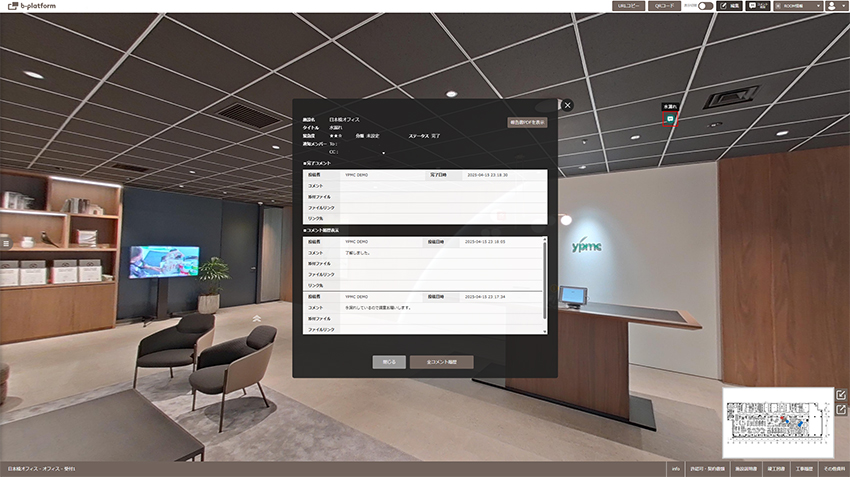

Operation image of the b-platform
The b-platform is not a particularly complex system, but it is built on an important concept. When we think of a facility as an asset, it’s not just the physical building that holds value. All the associated documents—such as drawings, specifications, and records—are also part of that asset. In reality, however, many owners end up losing these documents over time, even though they are critical for maintenance and long-term asset management.
That is why we developed the b-platform. It integrates these important documents into a centralized system. For example, if someone wants to inspect a ceiling, the platform can show exactly what type of finishing material was used. All of this information is accessible through 360-degree photographs, making it intuitive and easy to reference. Our goal is for property owners to use this system to manage their facilities more effectively and, in doing so, help preserve and increase the value of their assets.
I’m interested in your global strategy. Emerging markets like the Philippines are actively building new infrastructure, and I noticed that you’ve recently opened an office in Manila to support those developments. You’re also involved in projects such as the Morinaga food factory in the United States. Could you share more about your international approach and which countries you see as having the greatest potential for your business?
We do have staff based in Manila, but we don’t operate a dedicated office there. Instead, our team is embedded within a partner company.
As a facility strategist, we’ve developed a unique project management and construction management approach tailored to the Japanese market. That model has been well received by Japanese companies, and it’s been the foundation of our growth. Since many of the companies we serve are global, our international strategy is to follow and support them when they pursue projects overseas. In that sense, our global strategy is closely aligned with our clients’ global strategies.
This approach may also involve collaborating with local project management and design firms in international markets to ensure we can deliver the same level of service and expertise abroad.
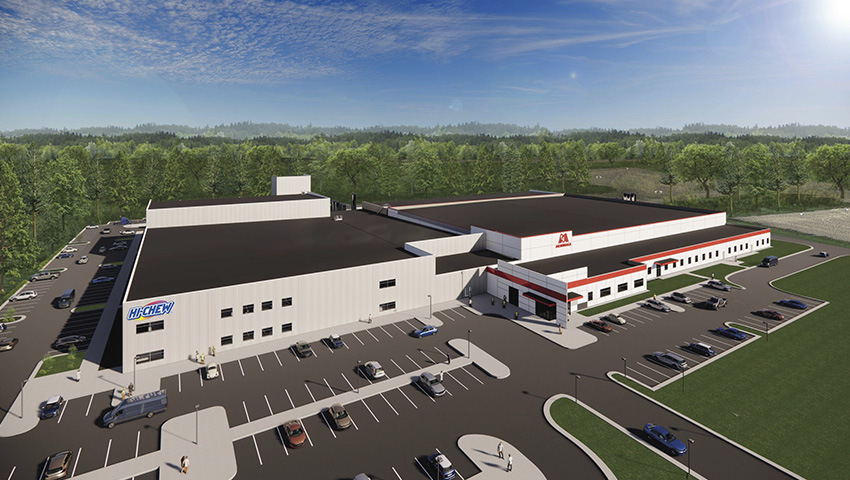

Morinaga America Foods Factory No.2 in NC, USA
In addition to supporting Japanese companies overseas, we also want to assist overseas investors when they are looking to invest in Japanese companies. Since we are already valued by our Japanese clients, we aim to offer that same level of service to international investors.
To do this effectively, we need to bridge the gap between different business customs, market conditions, and legal or regulatory frameworks. By understanding these differences, we can help optimize how investors allocate their capital in the Japanese market. Ultimately, our goal is to expand this capability and offer similar services to a broader range of overseas companies as well.
It’s interesting that you mentioned foreign investment in Japan. When it comes to property, Japan is quite unique among Asian countries in that there are no legal restrictions on foreign ownership. A foreign individual or business can fully own property in Japan, whereas in many Southeast Asian nations, a local partner is required to hold a majority stake. You also touched on cultural and market differences. What are some of the key differences you would expect to navigate when working with overseas investors in the Japanese market?
Even if a foreign investor wants to enter the Japanese market directly, it can be quite difficult because local companies often don’t know who they are. In those situations, if our company is involved and supports the investor in approaching the market together, it adds credibility and helps build trust. That is one way we can provide value to foreign investors.
In addition, we can support both foreign and domestic clients by offering strategic advice to help them make well-informed decisions. Our role is to guide them through the process and ensure they have the insights they need to succeed in the Japanese market.
Continuing on the topic of supporting foreign investors, which countries or regions do you see as having the most potential for investment in the Japanese market?
We’re seeing a growing number of investments coming from Hong Kong, Singapore, Malaysia, and other Southeast Asian countries, more so than from advanced economies like the United States or Europe. Investors from developed countries already have a long history of investing in Japan and are generally familiar with the differences in market practices and regulations.
In contrast, investors from Southeast Asia often lack experience in the Japanese market and typically do not have local entities established. As a result, they need a third party to guide them and provide reliable advice. This is why we’re seeing more business growth coming from Southeast Asia. There is a clear need for support, and we are in a position to provide it.
Looking back at the projects you’ve completed, which one are you most proud of, and what makes it stand out for you?
All of our projects are meaningful, but if I had to choose one, it wouldn’t be a high-profile stadium or a large-scale facility. It would be one of the recovery projects following the Great East Japan Earthquake. In coastal areas like Ishinomaki and Onagawa, the damage was severe. Interestingly, before rebuilding their own homes, the local communities prioritized the reconstruction of the fish market. It was a critical part of their livelihood and identity. We supported the national government in those recovery efforts, and being able to contribute to that process is something we are extremely proud of.
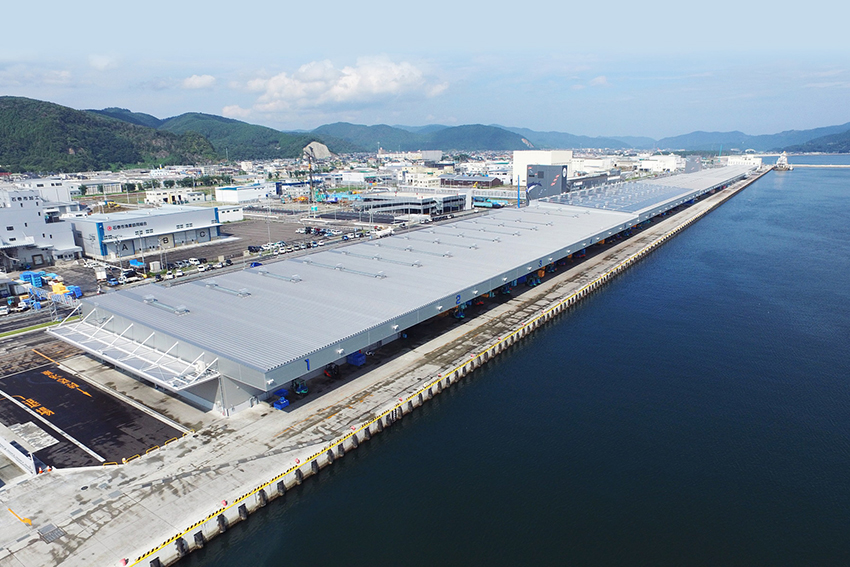

Ishinomaki Regional Wholesale Fish Market, Miyagi Japan
During the recovery of the fish market in that region, it was the first time all the construction work was carried out using open-book, cost-plus-fee contracts instead of the traditional lump sum agreements. This approach was chosen to accelerate the recovery process, and we were able to support the government in achieving a much faster reconstruction. That experience is something we are genuinely proud of.
Of course, we hope that no natural disasters occur anywhere in the world. But if something does happen, we believe the experience we gained through that project can be applied to support recovery efforts, even in overseas markets.
As president of the company, have you set any personal ambitions or goals that you hope to achieve before eventually passing the leadership on to the next generation?
This might be something that every business leader says, but by the time I retire, I want to pass on everything I’ve built during my time as president to the next generation. My goal is to reach a point where I can step aside with complete confidence in their ability to lead, without needing to say a single word. That would be the ideal outcome for me.
For more information, please visit their website at: https://en.ypmc.co.jp/about/outline/
link