
Restaurant brands start speaking Gen Alpha’s language
Did you know Chick-fil-A was founded in 1967?
This fact typically wouldn’t phase me much, as most of the brands I cover have deep histories. But I just happen to live with a Gen Alpha child who makes it a point to repeat “6-7” whenever appropriate (or inappropriate). So, when he saw Chick-fil-A’s founding date on one of my branded tumblers, well, let’s just say it’s now his branded tumbler.
Coincidentally, Chick-fil-A recently leveraged the viral “6-7” meme with an Instagram Reel calling out its founding year. I showed the post to my son and, predictably, he laughed.
Does this mean some type of seed has been planted? Isn’t that the point of marketing?
Indeed, few things resonate with 11-year-olds these days than the innocent yet viral memes they share with their peers, and as this “next up” generation pours into YouTube Shorts, TikTok, Instagram, and other short-film-supporting sites, such memes can proliferate in a literal instant.
Restaurant brands that jump into these real-time conversations convey a relatability and acceptance that are critical at that age.
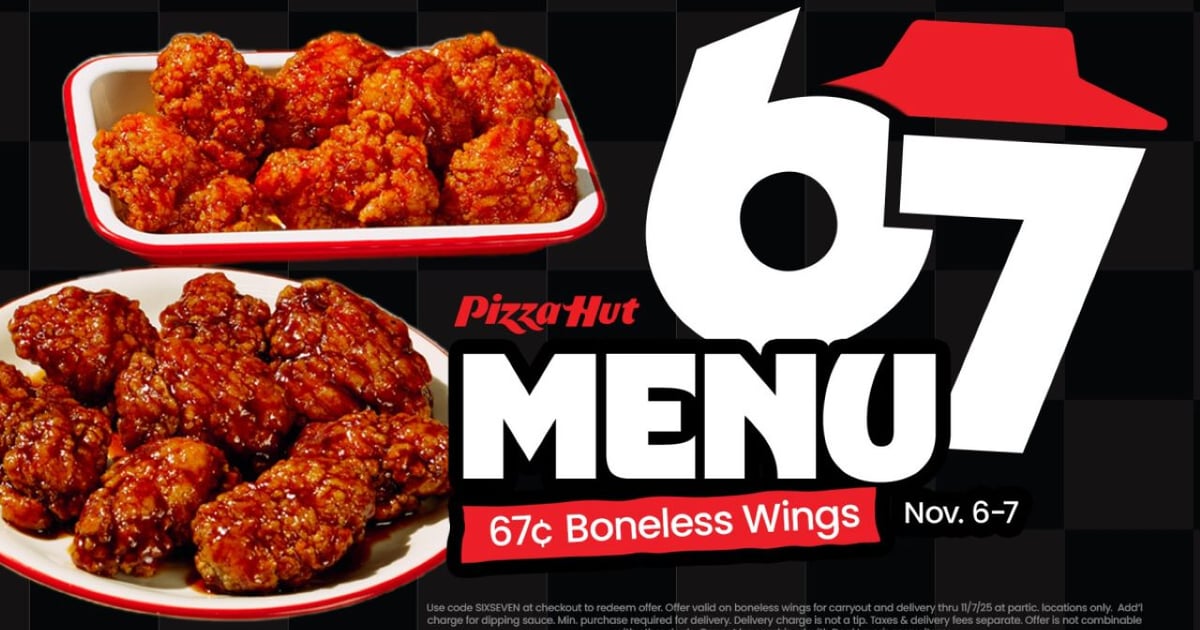
To be sure, Chick-fil-A isn’t the only chain embracing the 6-7 phenomenon. Pizza Hut also leveraged Dictionary.com’s “word of the year” with a “6-7” Menu, featuring 67-cent boneless wings that were available earlier this month (on Nov. 6 and 7, get it?).
And on Friday, Nov. 28, Wendy’s is offering its small Frosty Classic for 67 cents, calling it the “6-7 deal fans didn’t know they needed.” (By the way, if you’re unfamiliar with the origin of 6-7, I’d recommend looking it up versus depending on my “elderly” explanation, as my son calls it).
Beyond Gen Alpha’s vernacular, plenty of other restaurant brands have earnestly jumped onto other viral social trends in real-time, trends that largely appeal to the coveted Gen Z consumer, who very much remains a priority target as the demographic recently became the most frequent restaurant users. Pizza Hut, Burger King, Applebee’s, Jimmy John’s, Subway, and Wendy’s recently launched Group 7 promotions, for instance, capitalizing on another viral TikTok trend started by singer-songwriter Sophia James. She posted multiple videos to test which would reach the most viewers, designating each as different “groups.” The seventh video created the viral “Group 7” trend, which exploded across social media platforms.
Further, Tropical Smoothie Café recently launched an edible blue shimmer sugar topping to add “mermaid-inspired sparkle to any smoothie or bowl,” leveraging the viral, fashion designer-inspired mermaid-core trend that has proliferated on TikTok throughout the past two years.
Meanwhile, Dutch Bros just declared the third Wednesday of November as “National Passenger Princess Day,” again leveraging a viral trend, #passengerprincess, that has so far generated more than 200,000 posts on TikTok and Instagram. This marks the second year for Dutch Bros to host this promotion.
It’s worth noting that I had to look up what all these campaigns mean because I’m simply not the target generation. This inside baseball-type language isn’t meant for me. But for younger generations that now get most of their information and entertainment from these social media sites, it can be extremely resonate. Exclusive, even. That includes my child who is quickly becoming judicious with his allowance.
No doubt, the chase for Gen Z dollars has been under way for years now, but we’re now starting to see such campaigns trickle into Gen Alpha’s world as these consumers’ spending power increases. According to Numerator, they spend the bulk of their allowance on snacks, beverages, and quick-service food. So, it’s important to secure top-of-mind awareness for these consumers, and to do that, it’s important to meet them where they are and to speak their language.
Gen Alpha, typically defined as those born between 2013 and 2024, have never known an offline world. About 40% of them already use social apps such as YouTube, TikTok, Instagram, Roblox, and Snap. Qustodio research found that children aged 4 to 18 spend an average 112 minutes a day on TikTok — the highest for any social app it monitors.
In other words, as America’s youngest consumers gain more spending power — already surpassing $100 billion before most are even of working age — we can expect more unshakable, 6-7-code-language-type campaigns in the not-so-distant future.
Contact Alicia Kelso at [email protected]
Follow her on TikTok: @aliciakelso
link


